
Bird Flight Photography: How I Capture the Motion Behind Ornithographies
A Contemporary Approach to Bird Flight Photography
One of the most frequent questions I’ve been asked over the years is a simple one: how do you do it?
It makes sense. This is a new photographic technique that reveals bird flight in a way that hadn’t been done before. Although I prefer the project not to revolve entirely around the technique, I understand the curiosity especially from people who are passionate about bird flight photography. I would feel the same way.
Contemporary Chronophotography: Where My Technique Begins
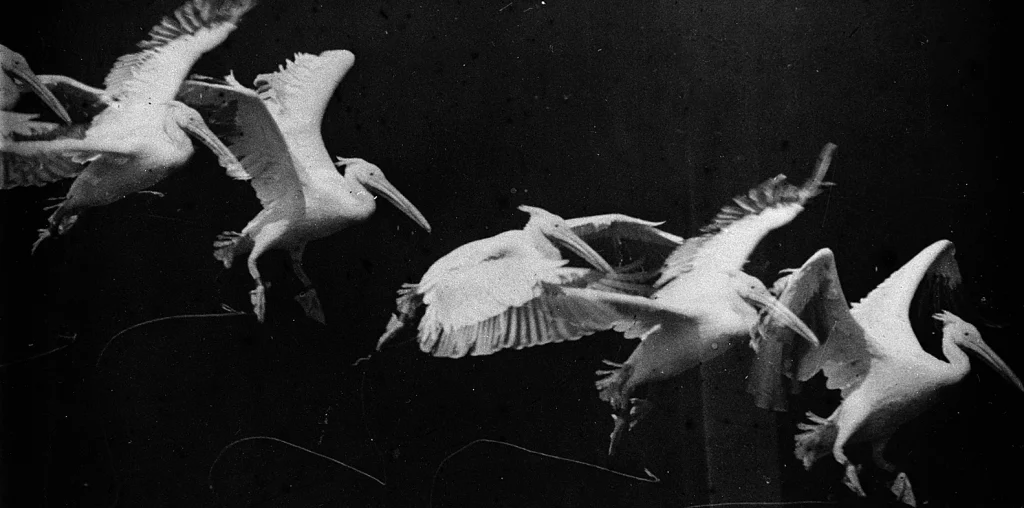
I like to refer to my process as a form of contemporary chronophotography. This term has its roots in the 19th century, when pioneers like Étienne-Jules Marey and Eadweard Muybridge used photography to study motion. They broke down time into a sequence of still frames to analyze how bodies moved through space.
Their approach was scientific and anatomical, designed to observe change frame by frame.
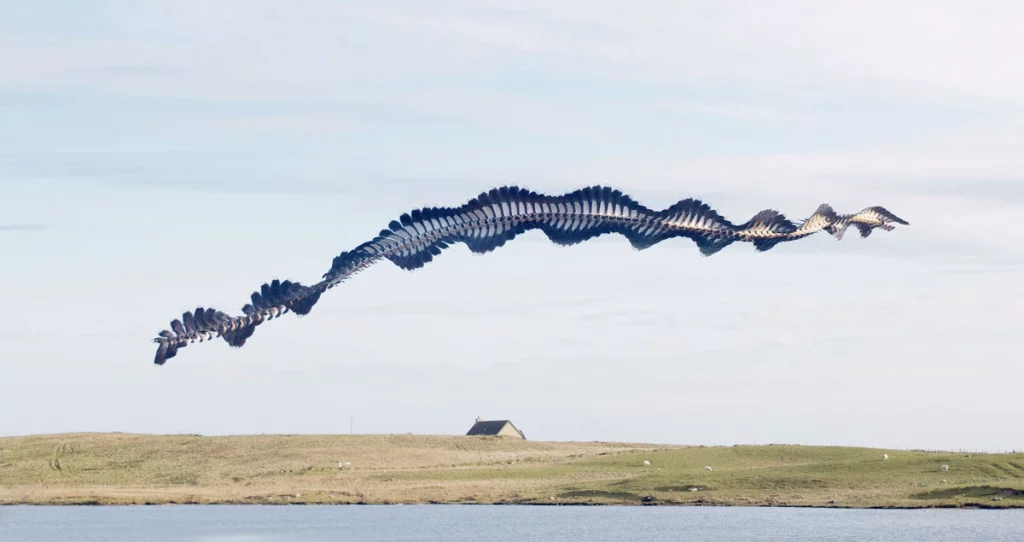
In my case, I’m also studying motion but I’m not interested in showing how the body changes shape over time. What fascinates me is the movement itself, as a whole. I want to reveal flight as a unified, fluid gesture.
Capturing Motion as a Single Gesture
To achieve this, it’s crucial to capture enough frames per second so that each position of the bird overlaps with the next, and the physical form of the bird begins to dissolve. When this happens, what emerges is a completely new visual form.
This is also why I don’t photograph birds flying.
I photograph flights.
Why I Use Slow-Motion Video for Bird Flight Photography
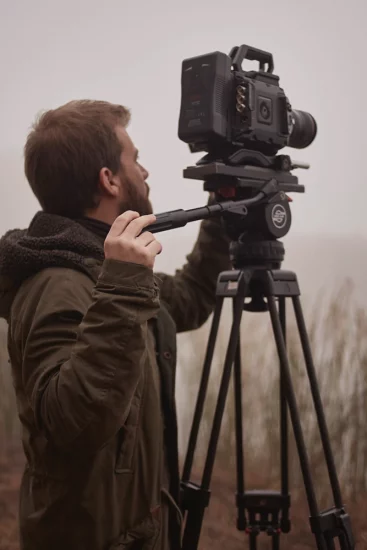
To capture so many frames per second, I realized I had to step away from traditional still photography and start recording slow-motion video sequences. Later, I combine the frames using algorithms to create a single image, keeping the background perfectly still.
This also means I can’t pan the camera to follow the bird.
I have to keep it fixed on a tripod and let the bird draw its own geometry through the air.
Evolving Cameras, Evolving Possibilities
Over the years, the type of camera I use has evolved as technology has improved. This has allowed me to produce large-format prints with enough resolution to maintain high visual quality. I believe that large format is essential to appreciate the full complexity of these movements. It allows viewers to become immersed in the flow in the invisible paths traced through the air.
Between Science and Art: The Essence of My Bird Flight Photography
The result is not just bird photography. It is something else, something between science and art. These images are a different way of seeing bird flight, transforming fleeting natural phenomena into permanent visual works. Each print is the trace of a moment that would otherwise disappear. A moment in nature, turned into artwork.
Through this approach, I try to share not only a visual experience, but also a way of connecting with nature, of sparking empathy and wonder. This is bird art as visual poetry.
This is photography that invites us to see time itself.
FAQs About Bird Flight Photography
What is bird flight photography?
Why use slow-motion video instead of traditional photography?
What equipment is best for photographing bird flight?
How are the final images created?
What makes this technique different from classic chronophotography?
